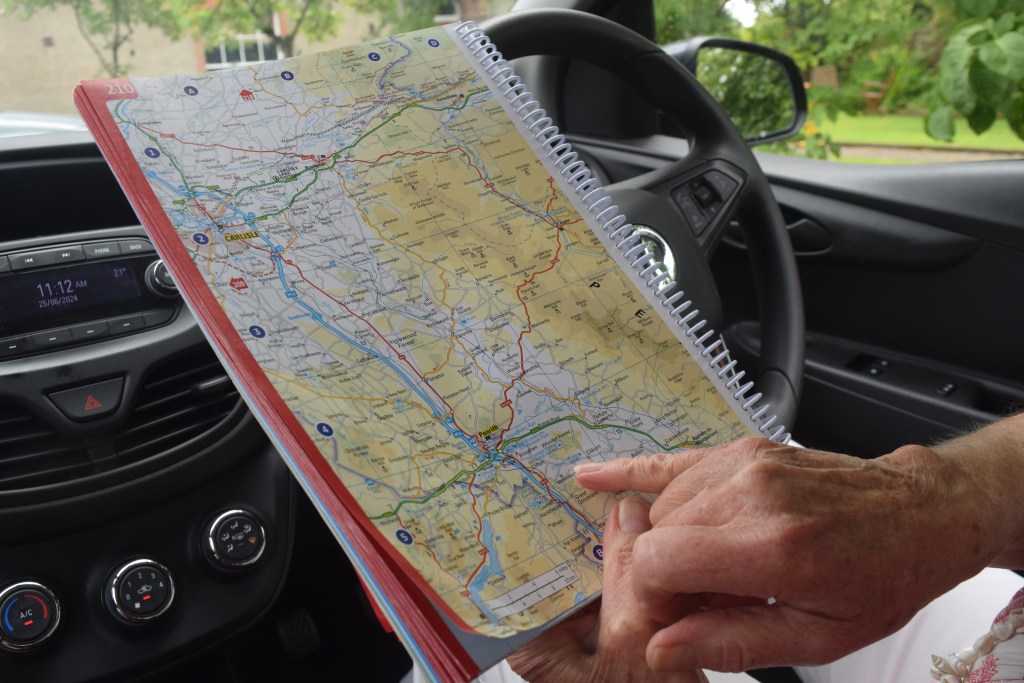
This was a recent day out in the Lake District: horrendously bumpy roads led to a turning taken at 12.28pm, the car said it was 24 degrees Celsius, yet another horrendously bumpy path had to be driven up, and the National Trust place called Acorn Bank (which dates back to the 13th Century – https://www.nationaltrust.org.uk/visit/lake-district/acorn-bank/the-history-of-acorn-bank) was eventually reached…
The car was left at 12.40pm, and what seemed to be an old horse box was the visitor reception; and there were 175 different varieties of apple trees in the orchard, and 3 different types of newt in the sunken garden, apple events, and community juicing for locals in September were described by the woman in this box giving us the map.
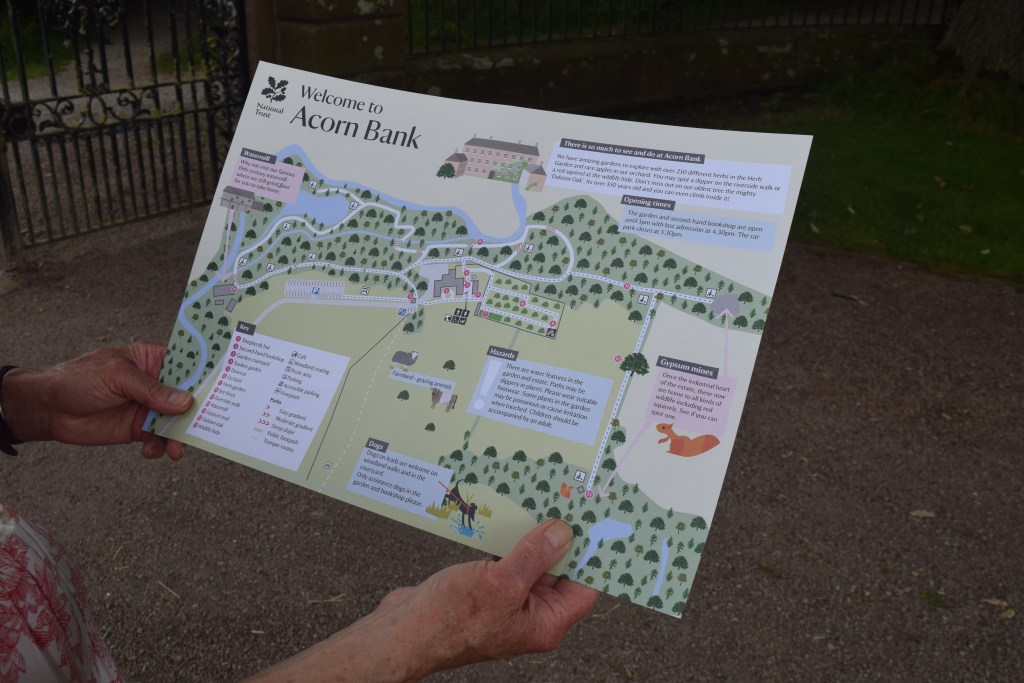
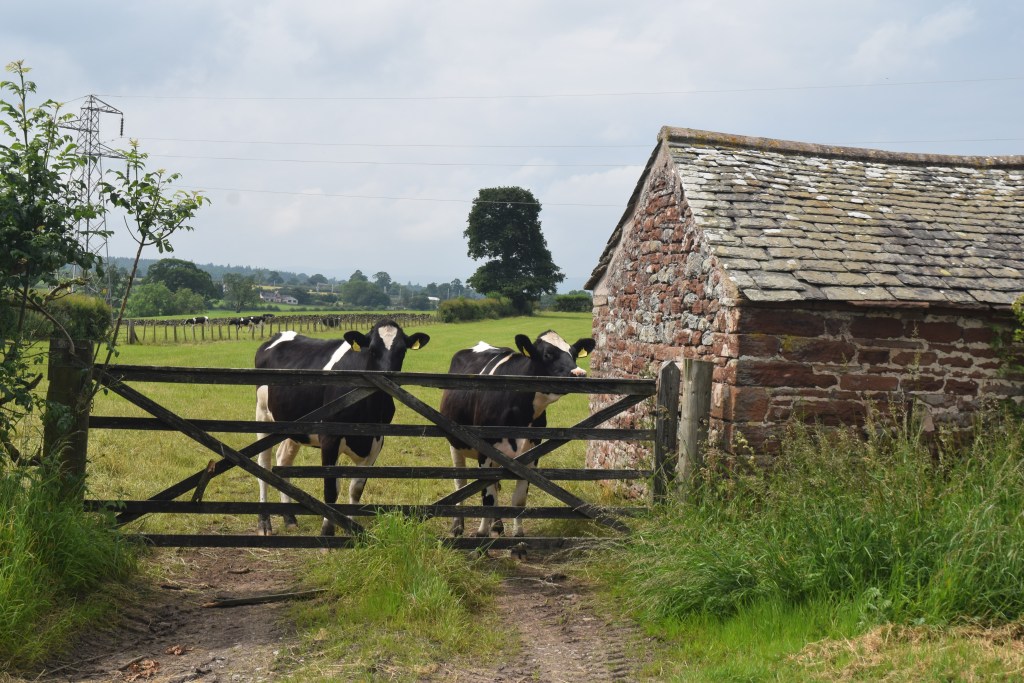
A man was being shown how to use a mobility scooter by the gate, there were deckchairs overlooking the sheep, cows, and countryside; and inside the house was a family tree (and a ‘Welcome to Acorn Bank’ sign mentioned that it was leased to the Sue Ryder Foundation who used it as a residential home until the 1990s), and a second hand book shop contained stuff I photographed. In another room was a big bit of oak (termed ‘the Armorial Overmantel’), and a man said a lot about it; Mum was shown a hearing loop due to her deafness; then we walked out with the map, a little Jack Russell dog was seated with people on the deckchairs by then, and a huge very twisted tree (which a staff member said was a beech tree called ‘the twisted sister’) was near the sunken garden – where a small pond was covered with water lilies and a small statue (presumably meant to be Cupid) of an angel (with wings and some sort of robe) was next to it.

Some stone stairs and a hole in a stone wall (where a sign said no scooters were allowed) led to a very bumpy steep slope down to the Crowdundle Beck River – where there was what seemed to be an overflow stream sort of thing; and we came back up the slope and returned to the courtyard (and gunshots could still be heard being intermittently fired in the distance), and then in the cafe – tea and coffee was being offered.
At 2.03pm – a general manager of something I forgot introduced himself and said something about toads; and then he said a lot of stuff at quite high speed, mentioned they had 11 staff, 82 volunteers, a terraced project, a compost project, a riverland project (which they’ve secured money for) to try and nudge the river to a slightly different course, a hay meadow project, the Acorn Bank Watermill Trust (the mill has 3 wheels) and a new a 1.5km trail (costing around £100000) has opened. At 2.15pm – we went outside again, and another man (early 70’s and once a production engineer) led us off down a path through the wood, and a few bits of dolls house furniture under a tree were pointed out.
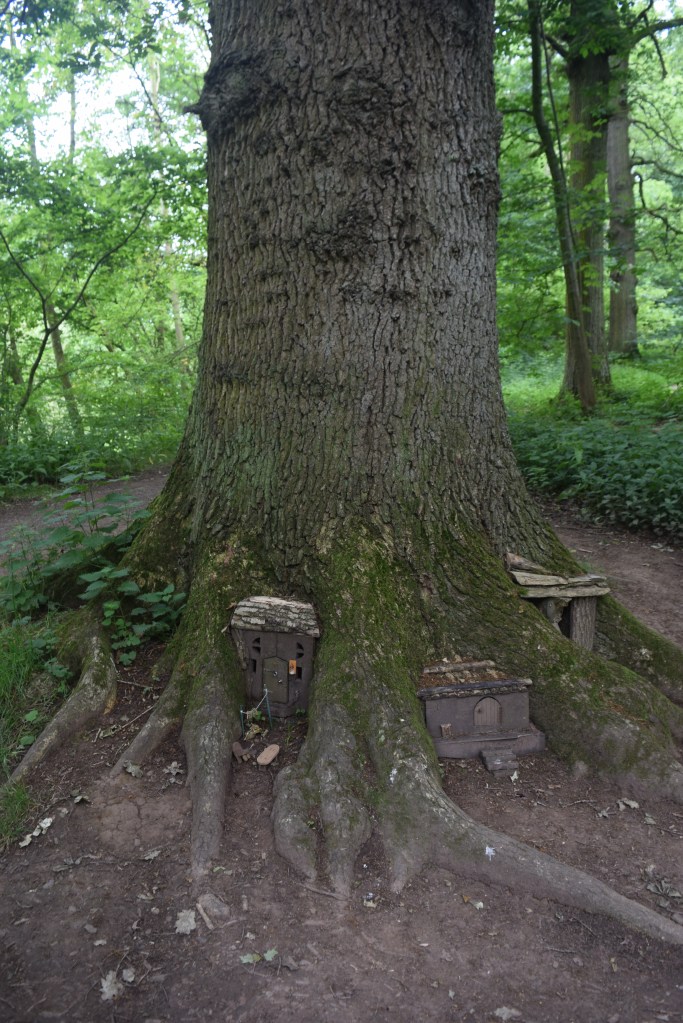
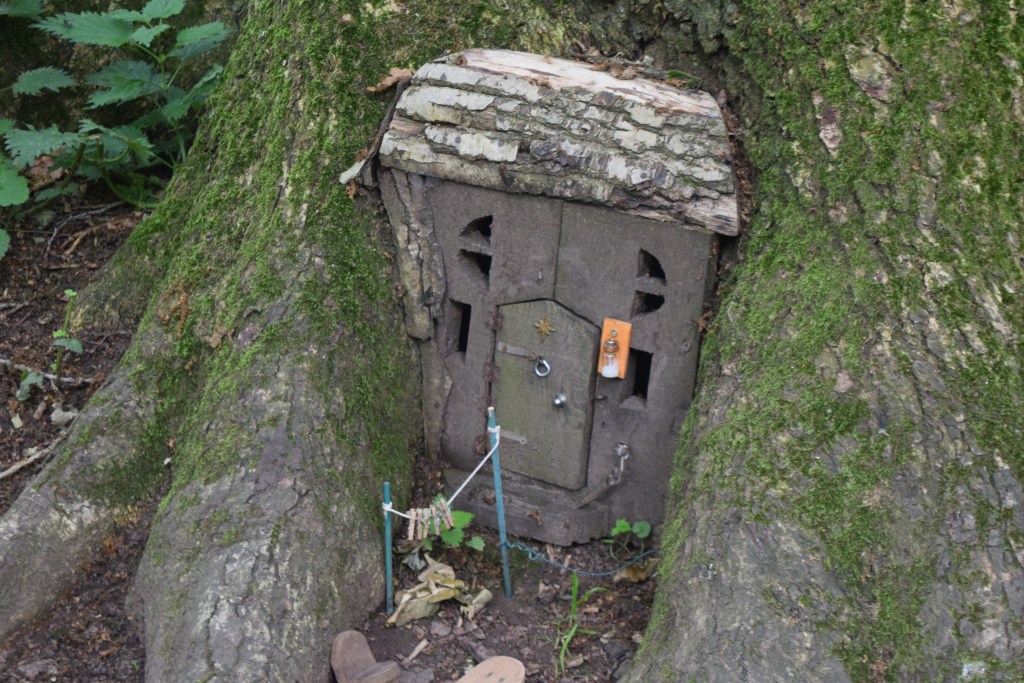
10 minutes later we were by the water mill, and the man described it’s mechanism….
…..then inside it was mentioned that it was originally built to mill oats, pictures of its mechanism were shown (and the flour that it mills does get sold), pictures of the disintegration of a wheel and it being repaired via a 3D printer at Lancaster University, and 22 volunteers came next, and 2 wheels found in a field in Wales now being used here.
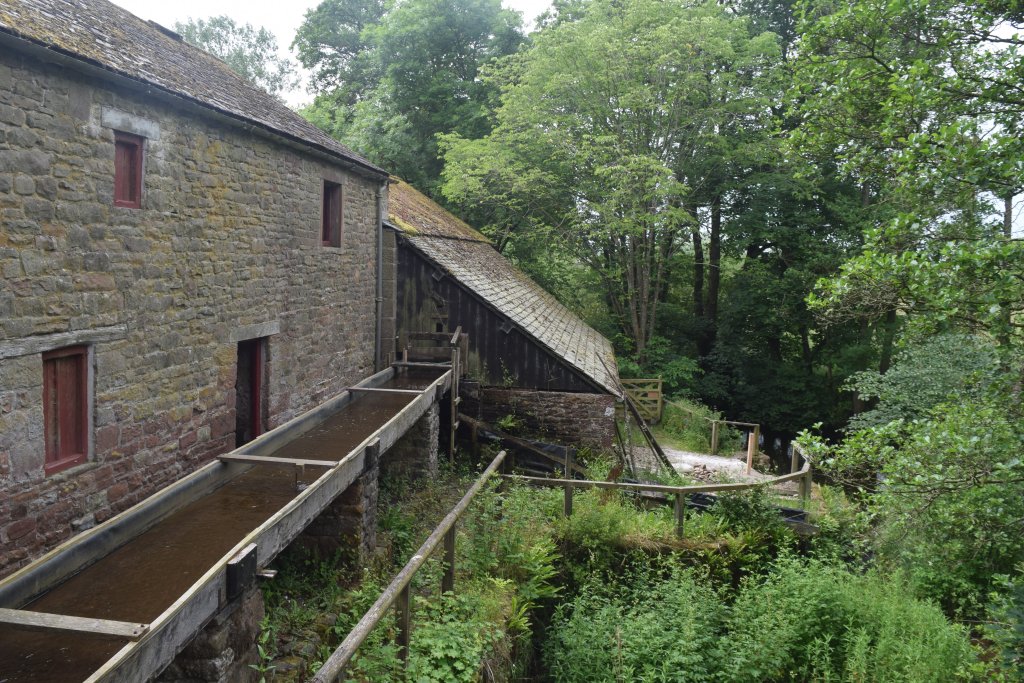
The very dark building was walked through, and in a mill yard area on the other side was a stone building containing an old milling mechanism (milling around 4 tonnes a year) (and amongst all the ancient wood and metal was a bright red 21st century fire extinguisher) which was explained (and I filmed a bit and forgot it all). Flour from it was for sale (and biscuits available to nibble) in a short and very dark tunnel leading to the second water wheel (where photographing things meant I forgot the explanation), and that was it, so just after 3pm, the path was taken back to the house.
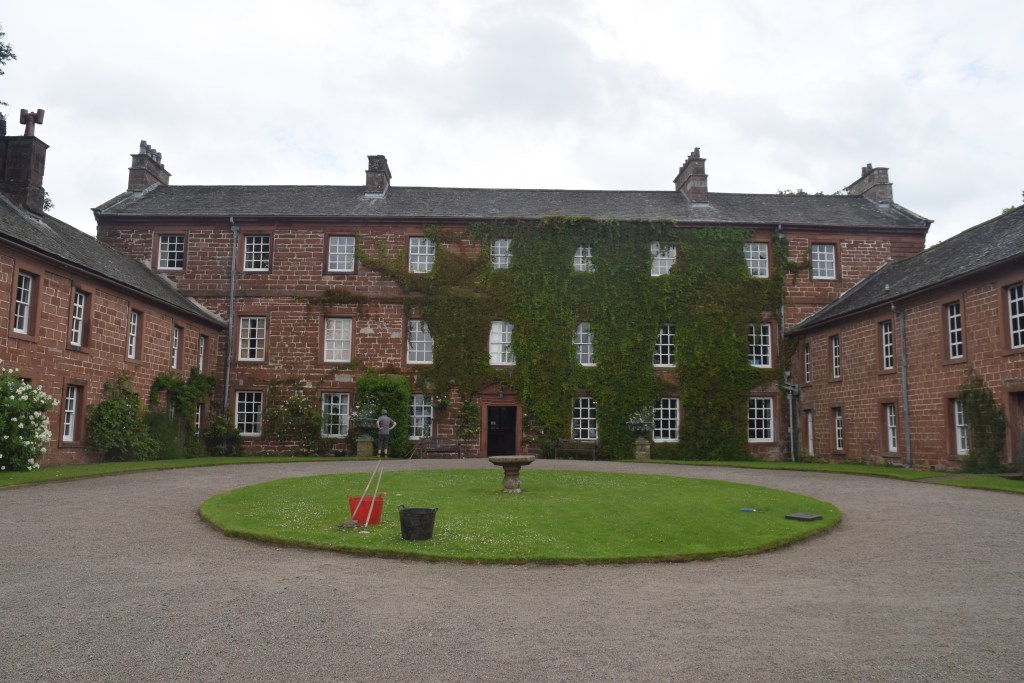
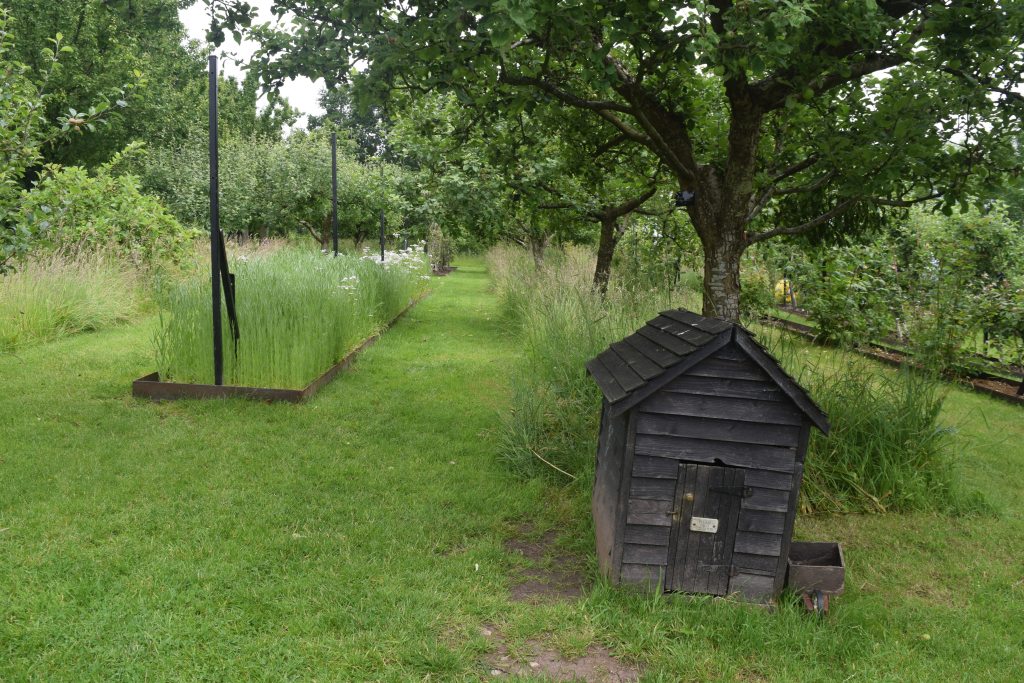
Another group seemed to be being guided off that way; a break was taken for people to use the facilities; and then we were led by a lady to the herb garden: there are 235 plants in it, grown for medicinal purposes and divided into 3 conditions (shade, partial shade, and full sun) – and there’s a grape vine in the full sun bit, big sunflowers were pointed out; and on the way round, foam flowers, variegated lemon balm, prostrate rosemary, opium poppies, whitecurrant, bulbous buttercups, and a massive leafed thing called a bistort were what I noticed. 125 apple trees were in the orchard (grown on cordons – so all leaning at a slight angle), the garden manager mentioned a childrens gardening club; and broad beans, Caucasian spinach, slightly oddly shaped apples, kale, beetroot, blackberries, gooseberries, elephant garlic, and a tiny little wooden house under a malus domestics tree were what I had time to observe.
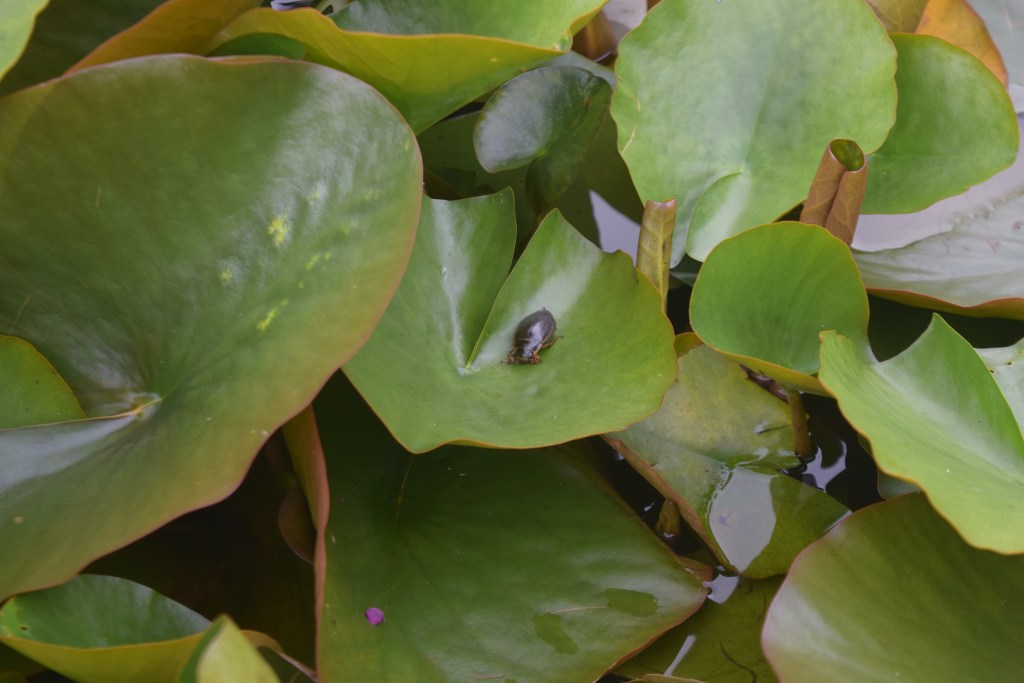
A u-turn was made at 3.45pm, juicing equipment they now have was mentioned, a blackbird was perched on a pillar by the ha-ha, the garden manager mentioned excavation of the 2 hahas during next year’s festival of archaeology was possible; and in the sunken garden, my photo taken earlier was identified by the man called Nick as a great diving beetle.
A bag of flour was purchased on the way out, I heard a bit of gunfire in the distance when returning to the car – which was reached at 5.10pm (and said it was 24°C).

There was a brief stop 10 minutes later at a level crossing in Culgaith; Langwathby contained a level crossing and there was a stop there; in Cameron a sign with ‘Ray Ivenson – Abolish council tax’ was on a pole; and back in Penrith at 5.47pm, I spotted ‘The Toffee Shop’ before making it back to the apartment – reached at 5.55pm.